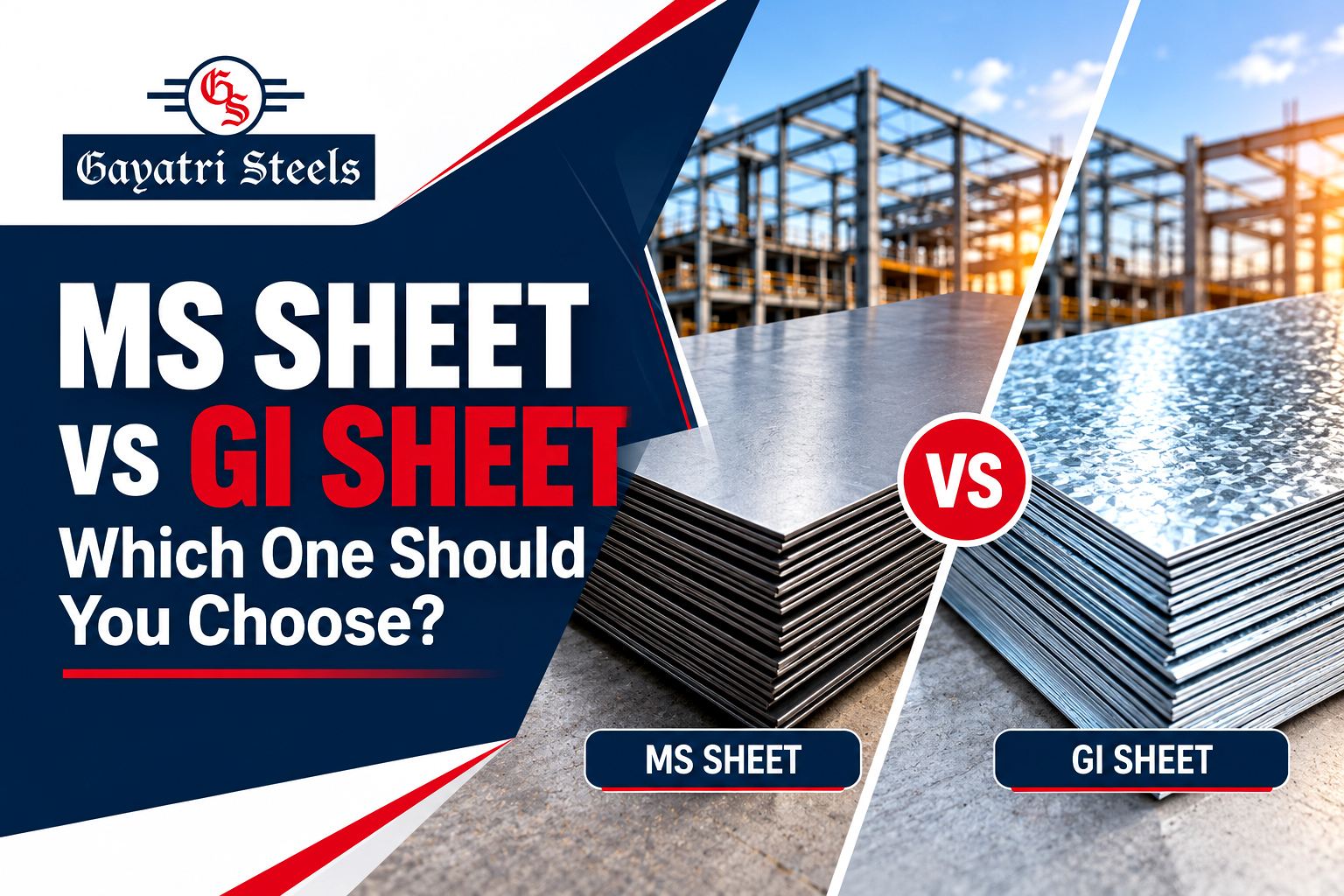

MS Sheet vs GI Sheet: Which One Should You Choose?
21
Oct , 2026MS Sheet vs GI Sheet: Which One Should You Choose?
Choosing the right steel sheet is important for ensuring durability, cost-effectiveness, and reliable performance in construction and industrial applications. MS sheets and GI sheets are two commonly used options, each offering different benefits depending on the project requirements.
Understanding the difference between an MS sheet and a GI sheet can help builders, fabricators, contractors, and manufacturers select the most suitable material for their needs.
What Is an MS Sheet?
An MS (Mild Steel) sheet is a flat steel product made from low-carbon steel. It is widely used in construction, manufacturing, fabrication, and engineering because of its strength, flexibility, and ease of processing.
MS sheets are relatively easy to cut, bend, drill, and weld, making them suitable for projects that require custom shapes and fabricated components. However, untreated MS sheets can rust when exposed to moisture and oxygen, so protective coatings or painting may be necessary.
Common Applications of MS Sheets
-
Industrial equipment and machinery manufacturing
-
Structural fabrication and metal frameworks
-
Automotive components and fabrication work
-
Storage tanks and metal enclosures
-
General engineering and construction projects
What Is a GI Sheet?
A GI (Galvanized Iron) sheet is generally a steel sheet coated with zinc to improve its resistance to corrosion. The zinc coating protects the underlying steel from rust and helps extend its service life when used in suitable environments.
GI sheets are commonly preferred for applications where exposure to moisture, changing weather conditions, or humid environments is a concern. Their performance depends on factors such as zinc coating thickness, steel grade, sheet thickness, and the conditions in which they are used.
Common Applications of GI Sheets
-
Roofing and wall cladding
-
HVAC ducting and ventilation systems
-
Electrical enclosures and cable management
-
Agricultural structures and equipment
-
Industrial panels and general-purpose fabrication
MS Sheet vs GI Sheet: Key Differences
Understanding the main differences between these two materials makes it easier to select the right option for your application.
| Feature | MS Sheet | GI Sheet |
|---|---|---|
| Material | Low-carbon steel | Steel with a zinc coating |
| Rust Resistance | Low without protective treatment | Better due to the zinc coating |
| Fabrication | Generally easy to cut, bend, and weld | Can be fabricated with suitable methods |
| Initial Cost | Generally more economical | Often costs more due to galvanizing |
| Maintenance | May require painting or other protection | Usually requires less corrosion-related maintenance |
| Surface Finish | Usually plain, uncoated steel | Zinc-coated metallic finish |
| Common Uses | Fabrication, machinery, and structural components | Roofing, ducting, panels, and moisture-exposed applications |
The final choice depends on the steel grade, thickness, coating specifications, fabrication requirements, and intended operating environment.
Advantages of MS Sheets
MS sheets offer several benefits for projects that require versatile and economical steel materials.
1. Cost-Effective Material
MS sheets are often an economical option for general fabrication and manufacturing, particularly when additional corrosion protection can be applied according to project requirements.
2. Easy Fabrication
Their good workability makes MS sheets suitable for cutting, welding, bending, and shaping into different components.
3. Versatile Applications
From machinery parts to structural components, MS sheets can be used across a wide range of industrial and commercial projects.
4. Flexible Surface Treatment
MS sheets can be painted, powder-coated, or treated using other suitable methods to improve corrosion resistance and achieve the required finish.
Advantages of GI Sheets
GI sheets are useful when corrosion protection and reduced maintenance are important considerations.
1. Improved Rust Resistance
The zinc coating helps protect the steel from corrosion, making GI sheets suitable for many applications exposed to moisture and weather.
2. Reduced Maintenance Requirements
When the coating remains intact and the sheet is used in an appropriate environment, GI sheets may require less corrosion-related maintenance than untreated MS sheets.
3. Suitable for Roofing and Ducting
GI sheets are widely used in roofing, ventilation systems, and industrial enclosures because of their protective coating and practical fabrication properties.
4. Longer Service Potential
With the correct coating specification, installation, and maintenance, GI sheets can offer a longer service life than unprotected mild steel in corrosive conditions.
Which Sheet Is Better for Your Project?
The best choice depends on how and where the material will be used.
Choose MS Sheets If:
-
Your project requires extensive welding and fabrication.
-
You need an economical material for general engineering work.
-
The sheet will be used indoors or in a controlled environment.
-
You can apply suitable paint or protective treatment when necessary.
Choose GI Sheets If:
-
The application involves exposure to moisture or outdoor weather.
-
You need better resistance to rust than untreated MS can provide.
-
You are manufacturing roofing sheets, ventilation ducts, or metal panels.
-
Reduced corrosion-related maintenance is a priority.
Important: GI sheets are not completely rust-proof. Cut edges, scratches, damaged coatings, standing water, and aggressive chemical exposure can reduce their corrosion resistance. For highly corrosive environments, evaluate the coating specification and consider whether another material or additional protection is required.
Factors to Consider Before Buying Steel Sheets
Before purchasing MS or GI sheets, consider the following factors to ensure that the material meets your project requirements.
1. Sheet Thickness: Select the appropriate thickness based on the required strength, forming process, and application.
2. Steel Grade: Check the specified grade and mechanical properties to ensure suitability for the intended use.
3. Environmental Conditions: Consider moisture, temperature, chemicals, and outdoor exposure when evaluating corrosion protection.
4. Fabrication Requirements: Determine whether the sheet needs cutting, bending, welding, painting, or other finishing processes.
5. Budget and Maintenance: Compare the initial purchase price with the expected maintenance and service-life costs.
6. Supplier Reliability: Choose a steel supplier that can provide consistent quality, suitable specifications, and material documentation when required.
Why Choose Gayatri Steels for Your Steel Requirements?
Selecting a reliable supplier is an important step in sourcing suitable steel materials for industrial and commercial applications. Gayatri Steels serves customers looking for steel products for a variety of fabrication, construction, and engineering requirements.
When sourcing MS or GI sheets, discuss your required dimensions, thickness, grade, finish, and application with the supplier to identify a suitable option.
Visit Gayatri Steels to explore its steel product range and enquire about your material requirements.
Conclusion
Both MS sheets and GI sheets have their own advantages. MS sheets are a practical choice for economical fabrication, machinery, and general engineering applications, while GI sheets are often better suited to projects that require improved corrosion resistance.
The right decision depends on your budget, working environment, fabrication requirements, and long-term maintenance expectations. By evaluating these factors before purchasing, you can choose a steel sheet that delivers the right balance of performance, durability, and value.
Frequently Asked Questions
1. What is the main difference between MS sheets and GI sheets?
MS sheets are generally uncoated mild steel, while GI sheets have a protective zinc coating that improves corrosion resistance.
2. Which is better for outdoor applications, MS or GI sheets?
GI sheets are generally more suitable for outdoor applications because their zinc coating helps protect against rust. The correct coating specification and environmental conditions are important.
3. Are GI sheets more expensive than MS sheets?
GI sheets often have a higher initial cost because of the galvanizing process, but they may reduce corrosion-related maintenance expenses.
4. Can MS sheets rust?
Yes. Untreated MS sheets can rust when exposed to moisture and oxygen. Painting or another suitable protective treatment can help reduce corrosion.
5. How do I choose the right steel sheet?
Consider the required thickness, steel grade, corrosion resistance, fabrication method, application, and total cost before making a decision.
16 Oct , 2026
MS Plate for Industrial and Construction Projects